


Every Other Craw Is a Drag Bait. This One Banks Off the Rocks at Full Speed.
Smallmouth decide in milliseconds. The Headbanger Craw System combines the craw with its own matching action heads — everything you need to build a more erratic, strike-triggering craw presentation.


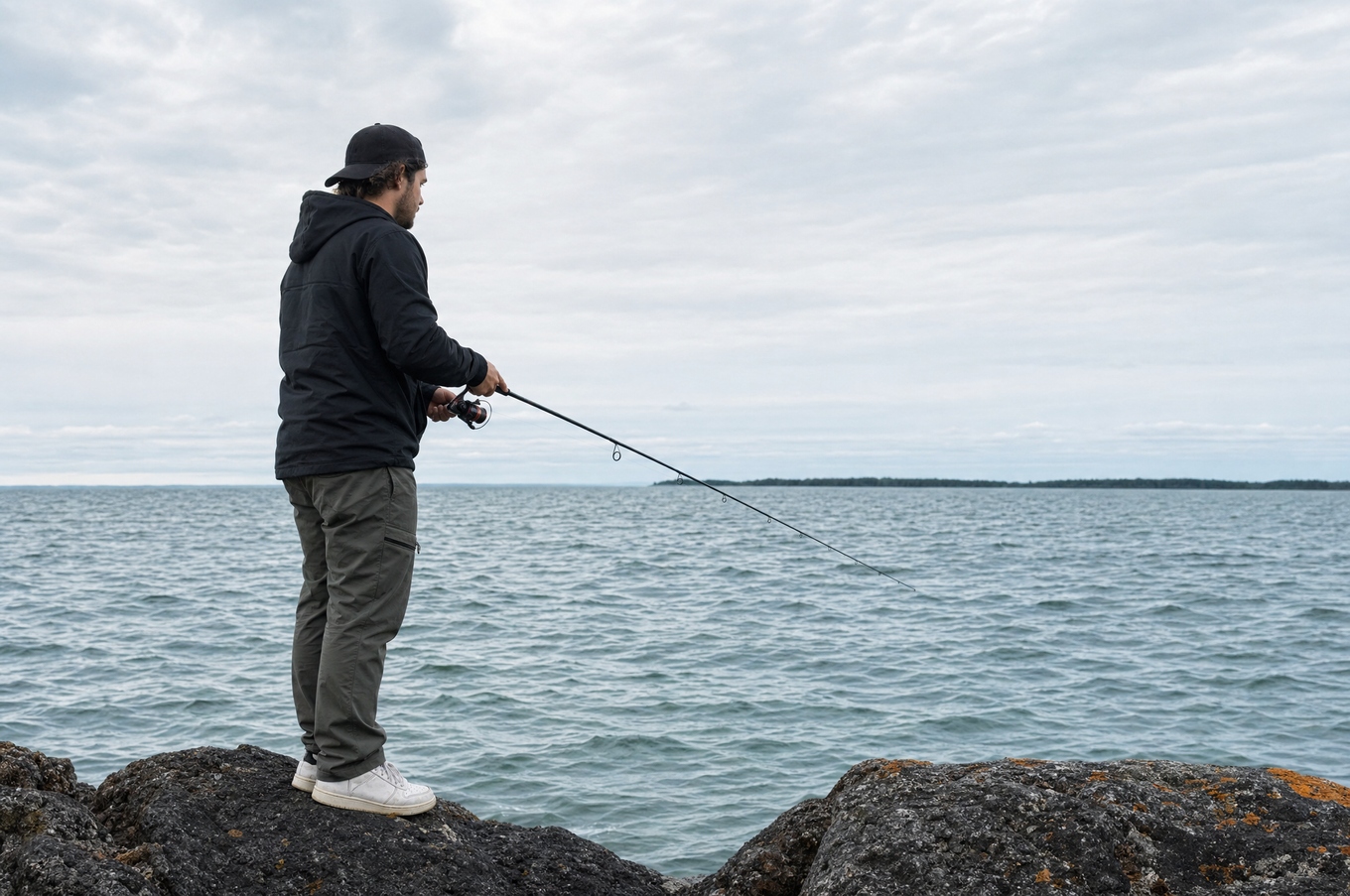
There are certain days on the water we don't talk about much.
Not the ones with nothing biting at all — those are easy to explain away. The ones that stick are the days you did everything right. Right spot. Right conditions. Right retrieve. And still came home with an empty box.
You tell your buddies "they just weren't feeding today." But you know that's not really what happened.
Cast. Drag. Nothing. Cast. Drag. Nothing.
You slow down. Still nothing. You speed up to cover more water — and the bait climbs off the bottom and dies right when you needed it most.
Meanwhile the guy two spots down the bank sets the hook again.
That's not just a slow day. It's a confidence problem — the kind that has you second-guessing your color, your retrieve, your whole spot, when the real issue was never any of those things.
Then there's the part nobody warns you about. You open the pack a couple weeks later and the claws have torn off after a fish or two — or worse, the whole pack has fused into one piece of rubber:
So you've got a craw that won't fire the bite, won't hold the bottom when you speed up, and doesn't survive the drive to the ramp.
That's not bad angling. That's the wrong tool — and nobody told you why.
Every angler who's fished long enough has felt this. Standing at the truck, watching someone else load a livewell, wondering what they know that you don't.
Now picture the other version of that day. The bite's tough, the sky's bluebird, and you tie on the one bait you trust. You burn it across a gravel flat, it cracks off a rock, kicks sideways — and a four-pound smallmouth crushes it on the deflection.
Not because the fish was hungry. Because you finally gave it a reason to react.
Why Nothing You Tried Fixed It Long-Term
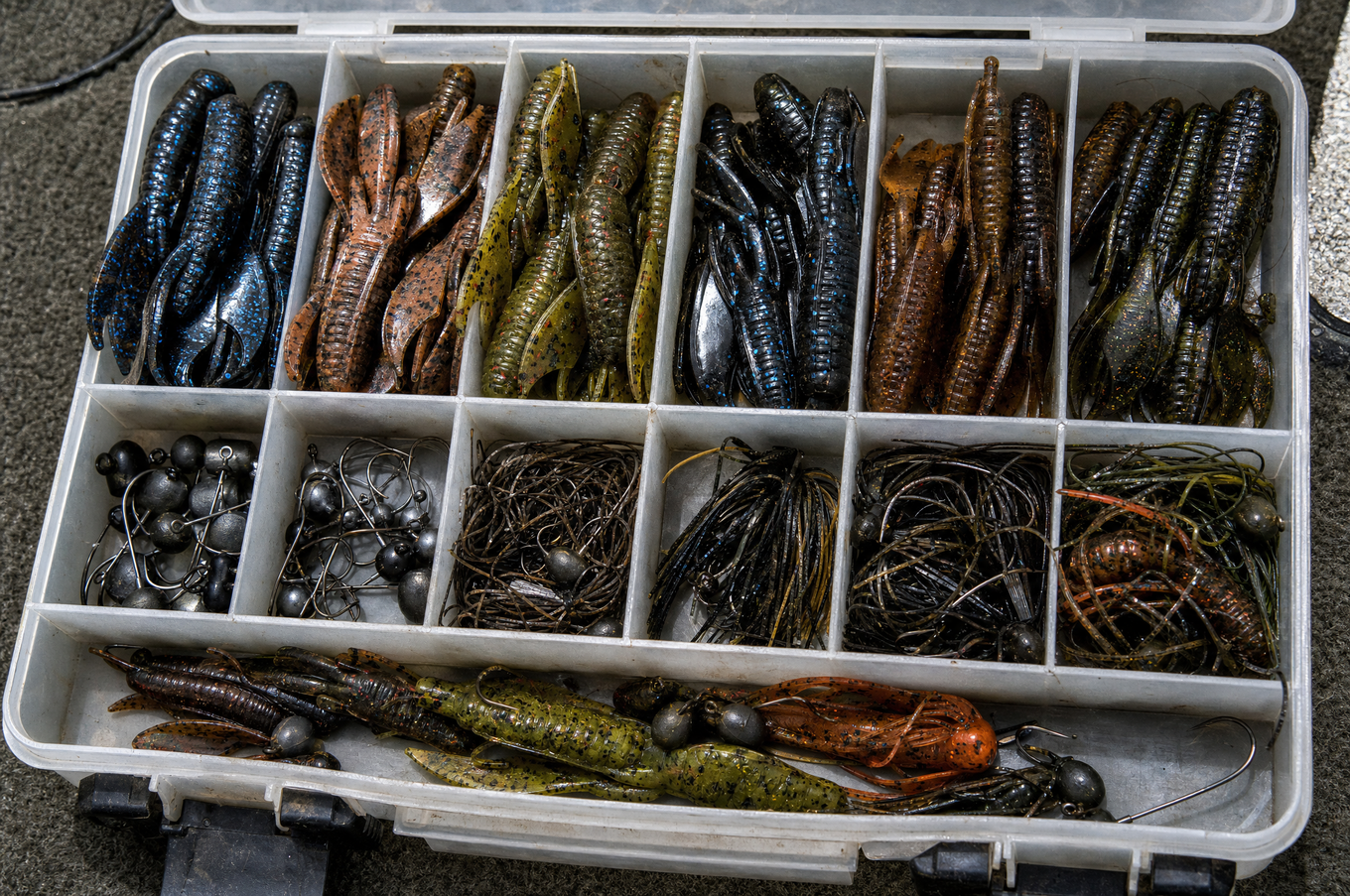
And you have tried. So has every serious angler:
- The Rage Craw — hard-flapping claws that genuinely move water and get bit.
- Z-Man's ElaZtech — tough, floats, lasts a long time.
- Every creature bait, beaver, and craw on the shelf — rigged on whatever generic jighead was in the tray.
- Every retrieve: drag it slow, Texas-rig it, Ned it, run it as a jig trailer.
None of that is stupid. The soft-plastic market is genuinely good right now.
We kept running into the same pattern. A new craw would work — for a trip, maybe two. Then the claws would tear, or the bite would dry up the second you tried to cover water faster.
Sometimes it got better for a while. But the good stretch never lasted, and the tackle box kept filling up faster than the livewell.
Nobody wants another gimmick rigged onto a generic jighead that changes nothing about how the bait actually moves. You wanted something that fixed the retrieve — not one more thing sitting in the tray.
Then something started standing out.
The days it worked best were never really about the craw. They were about whatever it was rigged on. Burn it on the right head, and it came alive. Drag it on the wrong one, and it died — no matter how good the plastic was.
That's when it clicked.
What if the problem was never the craw at all? What if the entire category had been chasing the wrong fix — softer plastic, more realistic claws, bigger profiles — while ignoring the one part of the rig that actually controls how the bait moves through the water: the head?
The Missing Piece: It Was Never the Plastic. It Was the Head.
Here's what almost nobody explains.
Smallmouth — and big pressured largemouth — are reactionary feeders. The strike is a reflex, fired by a sudden change in direction and speed, in a fraction of a second. A craw dragged slow across the bottom is, at best, a search tool. There's nothing in that retrieve to fire the reflex.
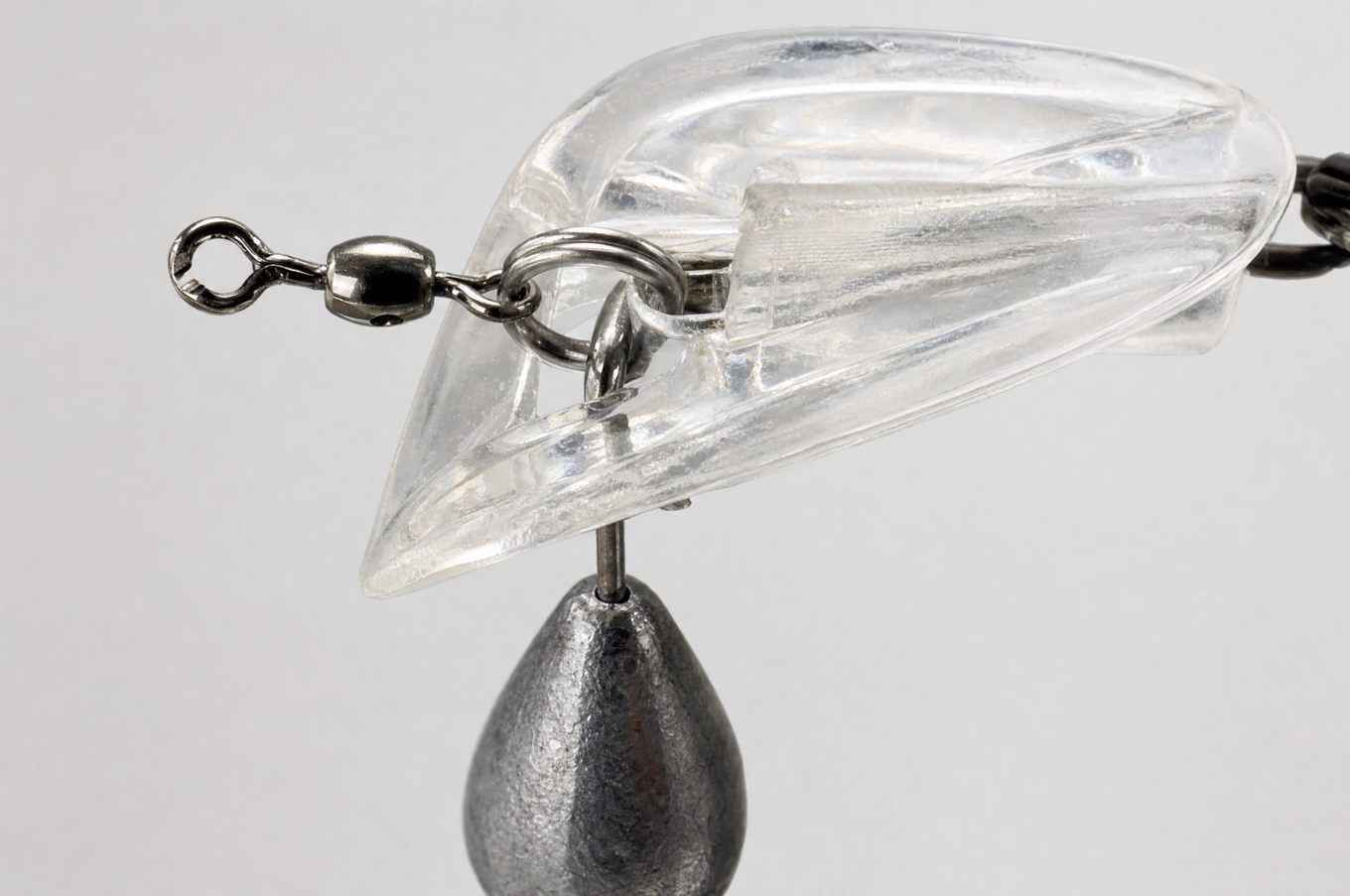
And a standard jighead makes it worse: it has no mechanism to hold depth at speed. The faster you reel, the more it planes toward the surface — so the one thing that triggers reaction feeders is the one thing a generic jighead won't let you do.
We weren't setting out to build "a system." We were just trying to figure out why the same craw fished so differently depending on what it was tied to.
That question led back to a head design that already had six years on the water behind it: 862 reviews, 544 of them five-star, before we ever built anything new around it.
We'll admit it — we're skeptical of anything that slaps the word "system" on a bag of parts. Half the time that's just marketing.
But three things made this different:
Best of all, it matched exactly what 1,113 verified buyers had already been saying.
Proven on the Water. Not in a Lab.
The head design behind this system isn't new — the RockerHead has spent six years on the water, and the reviews tell the story:
And the material is the durable class of soft plastic — floating TPE. If you've ever had a pack "melt into goo," that wasn't a defect. It's material physics:
The fix is simple: store TPE separately from your regular plastics, and it stays exactly as it should.
Why does all of that matter? Because when the head does the work, everything changes:
- Fish a craw fast — without it rising off the bottom
- Reaction strikes off rock, gravel and riprap
- Weedless through grass, wood and laydowns
- Dead plastics come alive with erratic, injured-fish action
These aren't lab results. They're what 1,113 verified buyers describe on the water.
What Makes This System Different
The key is ReactionDrive — a four-step chain where each step sets up the next:
Three Heads. Three Jobs. One Craw.
You don't pick one. You fish all three.
| RockerHead the cover head |
RockerHead X the hookup head |
BottomRocker the depth head — free |
|
|---|---|---|---|
| Hook | Weedless worm hook | Exposed tip, set back for better hookups | Exposed, deep-diving |
| Fish it for | Cover — grass, wood, laydowns | Clean bottom + max hookups — open structure | Depth + reaction — digs, holds depth at burn speed |
| Proof | 6 years, 862 reviews | New for 2025, patent pending | The reaction specialist |
Most anglers fish cover, clean bottom AND deep water in a single day. That's why the system has a head for each — so you're never the guy tied on the wrong bait.
Over 1,100 Verified Anglers Fishing the System — And Counting
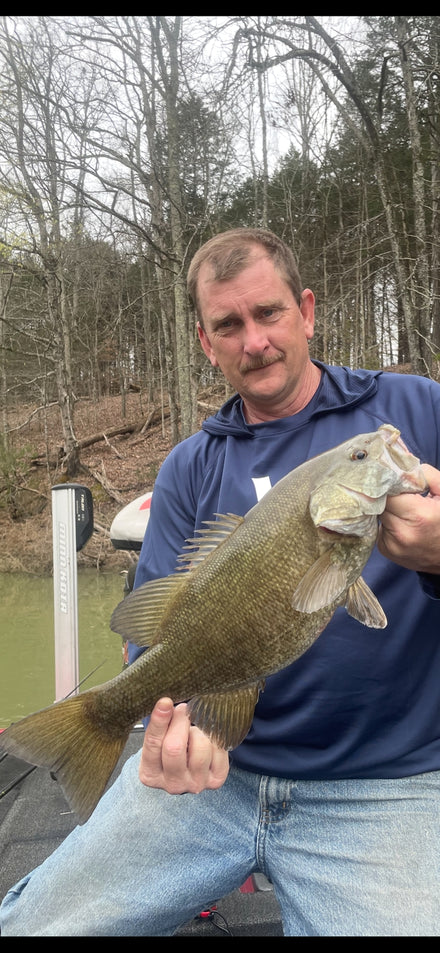
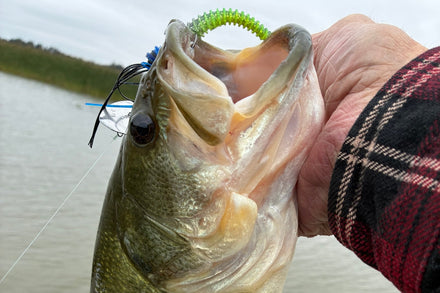
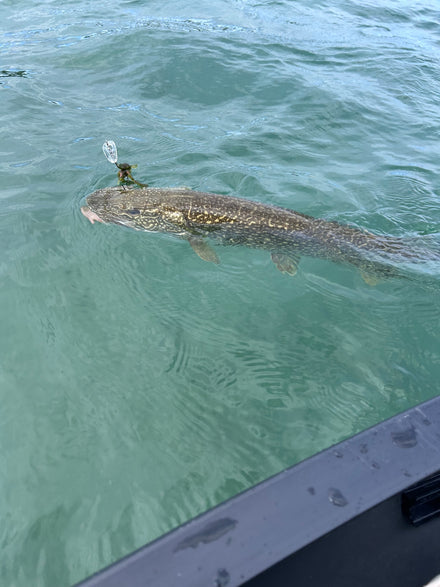
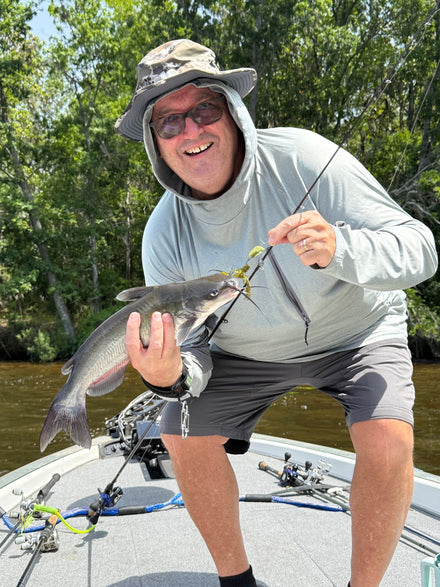
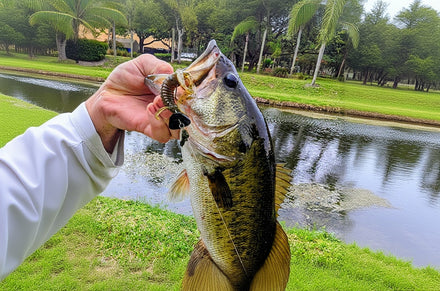
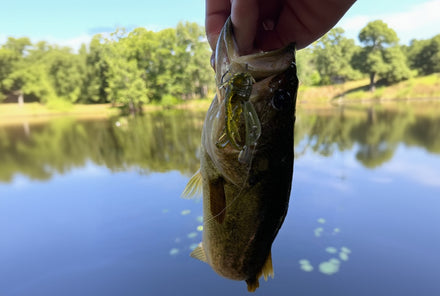
If you're skeptical, I get it. So was this guy:
Results like these fill six years of reviews — and the anglers writing them finally stopped second-guessing their bait.
Here's What Changes On the Water
How Much Does the Complete Craw System Cost?
We didn't want the head to be something you find out you need after checkout — an upsell buried at the last screen, or a second order once the bait shows up alone. So we built the system around including it from the start.
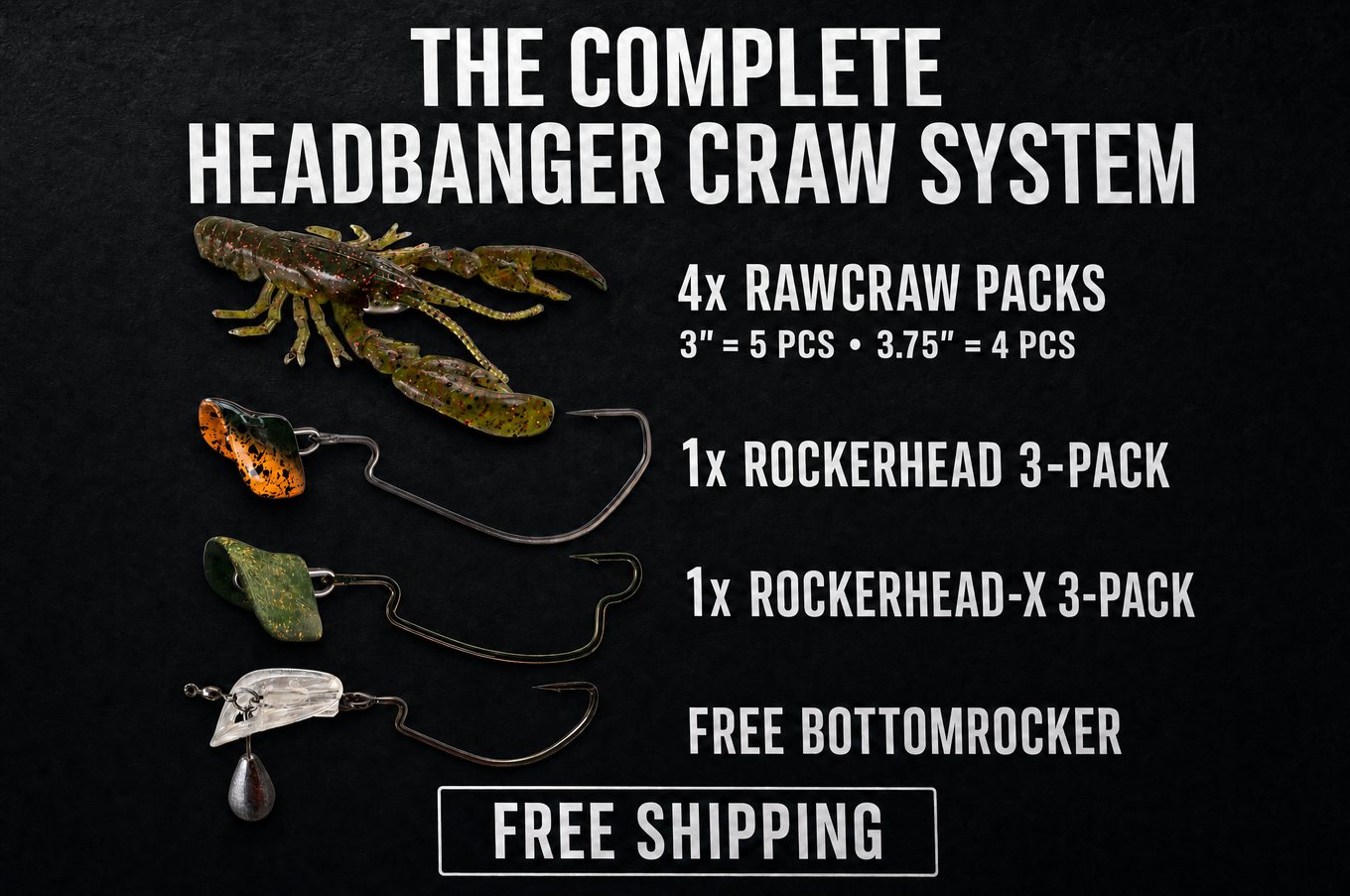
That's why the Complete Craw System comes with the BottomRocker depth head free, plus free shipping. And you pay less for the complete system than you would buying the parts separately — no discount gimmick, no subscription.
You're never locked into anything. One box: four packs of RawCraw and all three heads — cover, hookup, and depth — ready to fish the day it arrives.
And per fish? The craw that tears after one bass is the expensive one.
Whichever water you fish — cover, clean bottom, or depth — one of the three heads is built for it. Do the sink test the day it arrives, then take it to the water.
Click below to check today's availability.
Every Complete Craw System comes with all three action heads included — so you get the full setup in one bundle. The RawCraw is also available on its own, but the heads are what unlock the erratic, reaction-triggering action. See what's in the system.

Review counts across RawCraw (123), RockerHead (862) and BottomRocker (128) — verified buyers via Loox.
Quotes reproduced verbatim from verified buyer reviews, including original spelling.
